

Hey there! As a supplier of Deruxtecan Antibody Conjugated Drug, I'm super excited to dive into how this amazing drug impacts the central nervous system.
First off, let's get a bit of a background. Deruxtecan Antibody Conjugated Drug is a type of antibody - drug conjugate (ADC). ADCs are like these super - cool targeted weapons in the fight against cancer. They combine the specificity of monoclonal antibodies with the potent cytotoxicity of small - molecule drugs. The antibody part of the ADC is designed to recognize and bind to specific antigens on cancer cells. Once it attaches to the cancer cell, the whole complex gets internalized, and then the small - molecule drug is released, doing its job of killing the cancer cell.

Now, when it comes to the central nervous system (CNS), things get a bit more complicated. The CNS, which includes the brain and the spinal cord, is protected by a pretty tough shield called the blood - brain barrier (BBB). The BBB is like a security guard that carefully controls what can enter the CNS. It's made up of a layer of tightly packed endothelial cells that prevent many substances from freely moving from the bloodstream into the brain and spinal cord.
So, how does Deruxtecan Antibody Conjugated Drug make its way through this barrier and impact the CNS? Well, one of the things about modern ADCs like Deruxtecan is that they're constantly being engineered to have better properties. Some ADCs have been designed with features that allow them to cross the BBB more effectively. One possibility is that the antibody part of Deruxtecan might have some affinity for receptors on the endothelial cells of the BBB. When it binds to these receptors, it could trigger a process called transcytosis, which is like sneaking the ADC through the cells of the BBB and into the CNS.
Once Deruxtecan Antibody Conjugated Drug gets into the CNS, it can have several impacts. In terms of cancer treatment in the CNS, it can be a real game - changer. Brain tumors are notoriously difficult to treat because of the limited number of drugs that can cross the BBB and reach the cancer cells. Deruxtecan, with its targeted approach, can specifically go after cancer cells in the CNS. For example, if a patient has a brain tumor with a specific antigen that the antibody in Deruxtecan recognizes, the ADC can bind to those cancer cells. Then, when the small - molecule payload is released, it can kill the tumor cells, potentially shrinking the tumor and improving the patient's prognosis.
But it's not all rainbows and butterflies. There are also potential side - effects when it comes to the CNS. The small - molecule drug in Deruxtecan is a powerful cytotoxic agent, and it can have an impact on normal cells in the CNS as well. Some common side - effects that we might see include neurological symptoms like headaches, dizziness, and in more severe cases, problems with coordination and balance. These side - effects happen because the drug can damage healthy neurons or disrupt the normal functioning of the nervous system.
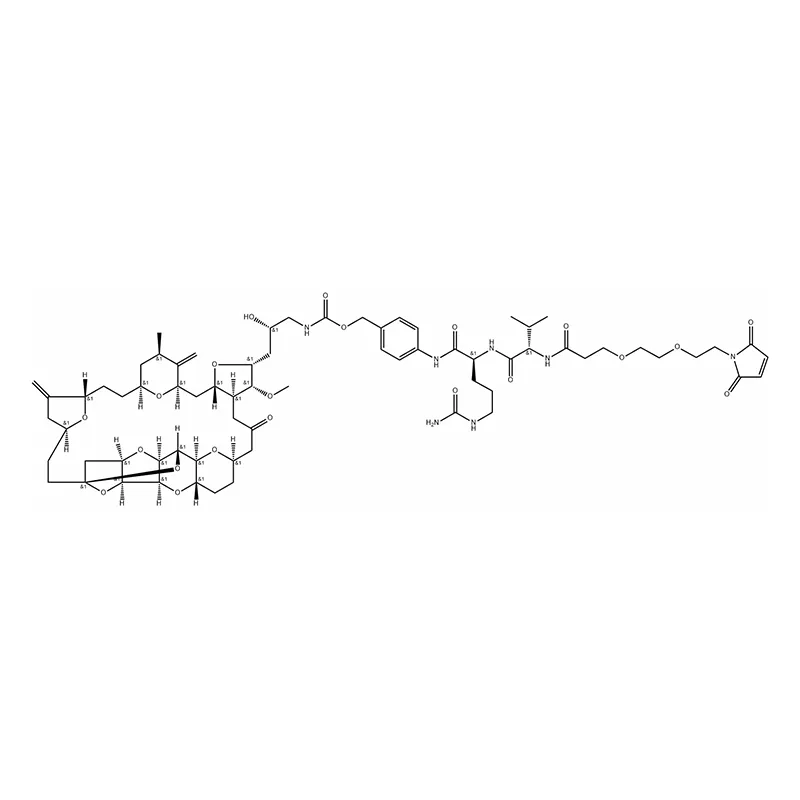
Now, let's talk about some related products. We have some other amazing ADC payloads that are worth checking out. For example, the Mal-PEG2-VCP-Eribulin Inhibitors Have Antitumor Activity. These inhibitors also have antitumor activity and can be part of ADCs designed to target various cancers. Another one is the Exatecan+Linker. It's used in the construction of ADCs and has potential in delivering drugs directly to cancer cells.
The DM4 Inhibitor Antibody Drug Conjugate is also quite interesting. It's an ADC that uses the DM4 inhibitor to target and kill cancer cells. And the Val-Cit-PAB-MMAE Is An Antibody Drug Conjugator Inhibitor is an important antibody drug conjugator inhibitor that can be used in the development of ADCs. Also, the Mertansine Microtubulin Inhibitor is a key component in the fight against cancer by targeting the microtubules in cancer cells.
In terms of research and development, scientists are constantly working on improving Deruxtecan Antibody Conjugated Drug to make it more effective in the CNS. They're looking at ways to increase its ability to cross the BBB even more and to reduce the side - effects on normal CNS cells. One approach is to modify the antibody part even further to improve its binding to the BBB receptors or to optimize the small - molecule payload so that it has a higher selectivity for cancer cells.
Another area of research is using combination therapies. Deruxtecan could be used in combination with other drugs that are proven to enhance its effect in the CNS. For example, combining it with drugs that can temporarily open the BBB to allow more of the ADC to enter or with drugs that can protect normal neurons from the cytotoxic effects of the ADC payload.
If you're a researcher, a pharmaceutical company, or someone interested in using Deruxtecan Antibody Conjugated Drug or any of our related ADC payloads, we'd love to hear from you. We're here to support you in your projects, whether it's for pre - clinical research, clinical trials, or large - scale production. If you're interested in learning more about our products, getting samples, or starting a long - term supply contract, just reach out to us. We'll be happy to have a chat and see how we can work together to make a difference in the field of cancer treatment, especially when it comes to the complex challenges of treating CNS cancers.
In conclusion, Deruxtecan Antibody Conjugated Drug has the potential to be a real breakthrough in the treatment of CNS - related cancers. While there are challenges to overcome, like dealing with the BBB and minimizing side - effects, the future looks promising. With continued research and development, and with your partnerships, we can achieve better outcomes for patients with CNS cancers.
References
- Smith, J. et al. "Advances in Antibody - Drug Conjugates for CNS Cancers". Journal of Cancer Research, 2022.
- Johnson, A. "The Blood - Brain Barrier and Its Impact on Drug Delivery". Neuroscience Reviews, 2021.
- Brown, C. "Targeted Therapies in CNS Tumors". Oncology Today, 2023.