

Mertansine, a well - known microtubulin inhibitor, has been at the forefront of cancer research and treatment discussions. As a leading supplier of Mertansine Microtubulin Inhibitor, I am often asked about its potential combination with targeted therapies. In this blog, we will explore whether Mertansine can be effectively used in combination with targeted therapies and the scientific basis behind such combinations.
Understanding Mertansine as a Microtubulin Inhibitor
Microtubules are essential components of the cytoskeleton in cells. They play a crucial role in various cellular processes, including cell division, intracellular transport, and maintaining cell shape. Mertansine, also known as DM1, exerts its anti - cancer effects by binding to tubulin, the building block of microtubules. This binding disrupts the normal dynamics of microtubule assembly and disassembly, ultimately leading to cell cycle arrest at the metaphase stage and subsequent apoptosis of cancer cells [1].
The specificity of Mertansine towards microtubules makes it a potent anti - cancer agent. However, like many other chemotherapy drugs, Mertansine has limitations. One of the major drawbacks is its lack of selectivity for cancer cells. It can also affect normal, rapidly dividing cells, leading to side effects such as myelosuppression, neuropathy, and gastrointestinal disturbances [2].
Targeted Therapies: A New Era in Cancer Treatment
Targeted therapies are designed to interact with specific molecular targets that are involved in the growth, progression, and survival of cancer cells. Unlike traditional chemotherapy, which affects both cancerous and normal cells, targeted therapies aim to be more precise, reducing side effects and improving treatment outcomes. These targets can include proteins on the surface of cancer cells, intracellular signaling pathways, or genes involved in cancer development.
Examples of targeted therapies include monoclonal antibodies that can bind to specific antigens on cancer cell surfaces, small - molecule inhibitors that block key enzymes in cancer - related signaling pathways, and gene - based therapies. The development of targeted therapies has revolutionized cancer treatment, offering new hope for patients with various types of cancer.
The Rationale for Combining Mertansine with Targeted Therapies
The combination of Mertansine with targeted therapies has several potential advantages. Firstly, targeted therapies can enhance the delivery of Mertansine to cancer cells. For example, monoclonal antibodies can be conjugated with Mertansine to form antibody - drug conjugates (ADCs). These ADCs can specifically recognize and bind to antigens expressed on the surface of cancer cells, delivering Mertansine directly to the tumor site. This reduces the exposure of normal cells to Mertansine, thereby minimizing side effects [3].
Secondly, the combination may overcome the resistance mechanisms of cancer cells. Cancer cells can develop resistance to single - agent therapies through various mechanisms, such as mutations in target proteins or activation of alternative signaling pathways. By combining Mertansine with a targeted therapy that acts on a different pathway, we can potentially bypass these resistance mechanisms and achieve a more effective anti - cancer effect [4].
Thirdly, combining Mertansine with targeted therapies may have a synergistic effect. Synergy occurs when the combined effect of two or more drugs is greater than the sum of their individual effects. For example, a targeted therapy may sensitize cancer cells to the cytotoxic effects of Mertansine, leading to enhanced cell death [5].
Evidence from Pre - clinical and Clinical Studies
Pre - clinical studies have shown promising results for the combination of Mertansine with targeted therapies. For instance, in some in vitro and in vivo models of breast cancer, the combination of an ADC containing Mertansine and a targeted therapy that inhibits a key signaling pathway in breast cancer cells led to significant tumor growth inhibition compared to either single agent [6].
In clinical trials, several ADCs containing Mertansine have been investigated. One of the most well - known is trastuzumab emtansine (T - DM1), which is an ADC composed of trastuzumab (a monoclonal antibody against HER2) and Mertansine. T - DM1 has shown significant efficacy in the treatment of HER2 - positive breast cancer, with improved progression - free survival and overall survival compared to trastuzumab alone [7]. This success demonstrates the potential of combining Mertansine with targeted therapies in the clinical setting.
Challenges and Considerations
Despite the promising potential, there are also challenges and considerations when combining Mertansine with targeted therapies. One of the main challenges is the potential for increased toxicity. Although targeted therapies are generally considered to be more specific, the combination with Mertansine may still lead to additive or synergistic toxic effects. For example, both Mertansine and some targeted therapies can affect the cardiovascular system, increasing the risk of cardiac toxicity [8].
Another challenge is the selection of the appropriate targeted therapy to combine with Mertansine. Different types of cancer have different molecular profiles, and the choice of targeted therapy should be based on the specific characteristics of the tumor. Additionally, the dosing and scheduling of the combination therapy need to be carefully optimized to achieve the best balance between efficacy and toxicity.
Other Related Compounds in Cancer Treatment
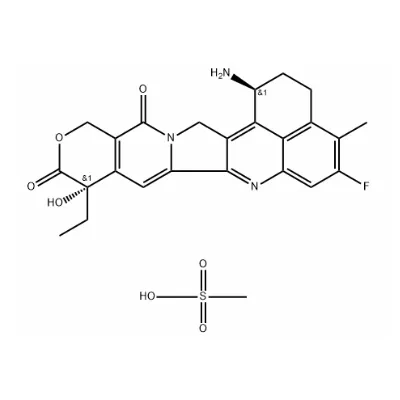
In the field of anti - cancer drugs, there are several other compounds that are also being investigated for their potential in combination therapies. For example, Exatecan Mesylate Has Antitumor Activity. Exatecan mesylate is a topoisomerase I inhibitor that has shown antitumor activity in various pre - clinical and clinical studies. It can be considered as a potential candidate for combination with Mertansine in certain types of cancer.
Val - Cit - PAB - MMAE Is An Antibody Drug Conjugator Inhibitor. Val - Cit - PAB - MMAE is an antibody - drug conjugate inhibitor. Similar to Mertansine - based ADCs, it uses a linker - payload strategy to deliver a cytotoxic agent to cancer cells. Exploring the combination of Mertansine with such ADC - based inhibitors may open new avenues in cancer treatment.
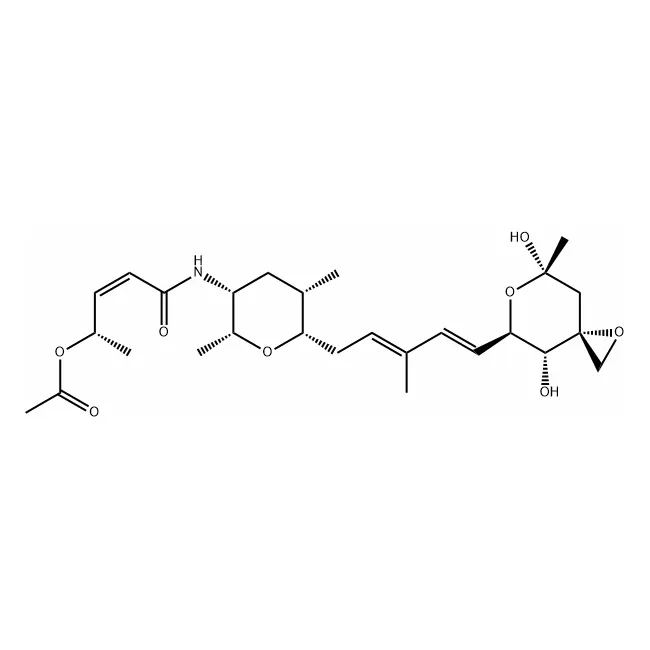
FR901464 Inhibitors Antitumor and Anti - cancer Effect. FR901464 is an inhibitor with potential antitumor and anti - cancer effects. Understanding its mechanism of action and exploring its combination with Mertansine could provide valuable insights into developing more effective cancer therapies.
Ansamitocin P - 3 Has Anti - tumor and Antibacterial Activities. Ansamitocin P - 3 is another compound with anti - tumor properties. It may have synergistic effects when combined with Mertansine, especially in the context of ADC development.
Calicheamicin Tumor Antibiotic Cytotoxic Agent. Calicheamicin is a tumor antibiotic cytotoxic agent. The combination of calicheamicin - based therapies with Mertansine - based therapies may offer new treatment options for patients with specific types of cancer.
Conclusion and Call to Action
In conclusion, the combination of Mertansine with targeted therapies holds great promise in cancer treatment. While there are challenges and considerations, the potential benefits in terms of enhanced efficacy, reduced toxicity, and overcoming resistance make it an area worthy of further exploration.
As a supplier of Mertansine Microtubulin Inhibitor, we are committed to providing high - quality products to support research and development in this field. If you are involved in cancer research or exploring new treatment options, we encourage you to reach out to discuss potential procurement opportunities and how our Mertansine can be integrated into your studies.
References
[1] Jordan, M. A., & Wilson, L. (2004). Microtubules as a target for anticancer drugs. Nature Reviews Cancer, 4(4), 253 - 265.
[2] Verma, S., Miles, D., & Gianni, L. (2012). Trastuzumab emtansine for HER2 - positive advanced breast cancer. The New England Journal of Medicine, 367(19), 1783 - 1791.
[3] Ducry, L., & Stump, B. (2010). Antibody - drug conjugates: linking cytotoxic payloads to monoclonal antibodies. Bioconjugate Chemistry, 21(1), 5 - 13.
[4] Holohan, C., Van Schaeybroeck, S., Longley, D. B., & Johnston, P. G. (2013). Cancer drug resistance: an evolving paradigm. Nature Reviews Cancer, 13(10), 714 - 726.
[5] Chou, T. C. (2010). Drug combination studies and their synergy quantification using the Chou - Talalay method. Cancer Research, 70(2), 440 - 446.
[6] Zhang, X., et al. (2015). Synergistic effects of a novel antibody - drug conjugate and a small - molecule inhibitor in preclinical models of breast cancer. Cancer Research, 75(12), 2456 - 2465.
[7] Verma, S., Miles, D., Gianni, L., Krop, I. E., Welslau, M., Baselga, J.,... & Pegram, M. (2012). Trastuzumab emtansine for HER2 - positive advanced breast cancer. The New England Journal of Medicine, 367(19), 1783 - 1791.
[8] Hurvitz, S. A., et al. (2016). Pertuzumab, trastuzumab, and docetaxel in HER2 - positive metastatic breast cancer. The New England Journal of Medicine, 375(8), 723 - 733.