

The administration route of a drug can significantly impact its efficacy, pharmacokinetics, and safety profile. In the case of Exatecan Mesylate, a potent antitumor agent, understanding how different administration routes influence its antitumor activity is crucial for optimizing its therapeutic use. As a supplier of Exatecan Mesylate with proven antitumor activity, we are deeply invested in exploring these aspects to provide the best products and guidance to our customers.
Pharmacological Basis of Exatecan Mesylate's Antitumor Activity
Exatecan Mesylate is a water - soluble derivative of camptothecin, a class of natural compounds known for their topoisomerase I inhibitory activity. Topoisomerase I is an essential enzyme involved in DNA replication, transcription, and repair. By binding to the topoisomerase I - DNA complex, Exatecan Mesylate prevents the religation of DNA single - strand breaks, leading to the accumulation of DNA damage, cell cycle arrest, and ultimately, apoptosis in cancer cells.
Intravenous Administration
Intravenous (IV) administration is one of the most common routes for delivering Exatecan Mesylate. When administered intravenously, the drug is directly introduced into the bloodstream, allowing for immediate systemic distribution. This results in a rapid onset of action and high initial drug concentrations in the plasma.
The advantage of IV administration is its ability to achieve high drug levels in tumors quickly. In pre - clinical studies, IV injection of Exatecan Mesylate has shown significant antitumor effects in various cancer models, including lung cancer, colorectal cancer, and ovarian cancer. The direct access to the systemic circulation ensures that the drug can reach the tumor site efficiently, especially in cases where the tumor has a rich blood supply.
However, IV administration also has some limitations. The high initial plasma concentration can lead to potential systemic toxicity, as the drug is distributed throughout the body. Side effects such as myelosuppression, nausea, vomiting, and diarrhea are commonly associated with IV - administered Exatecan Mesylate. Additionally, the need for specialized equipment and trained medical personnel for IV infusion can be a practical challenge in some healthcare settings.
Oral Administration
Oral administration offers several advantages over IV administration. It is a more convenient and patient - friendly route, eliminating the need for invasive procedures. Patients can take the drug at home, which improves their quality of life and compliance with the treatment regimen.
For Exatecan Mesylate, oral administration has been investigated in clinical trials. The drug is absorbed through the gastrointestinal tract and then enters the systemic circulation. However, the bioavailability of orally administered Exatecan Mesylate is a critical factor. Bioavailability refers to the fraction of the administered dose that reaches the systemic circulation in an active form. Factors such as the drug's solubility, stability in the gastrointestinal environment, and first - pass metabolism can affect its oral bioavailability.
In some studies, oral Exatecan Mesylate has shown comparable antitumor activity to IV administration in certain cancer types. The slower and more sustained release of the drug from the gastrointestinal tract may result in a more favorable toxicity profile compared to IV administration. However, the variability in oral absorption among individuals can be a drawback, as it may lead to inconsistent drug levels in the blood and potentially affect the treatment outcome.
Intratumoral Administration
Intratumoral administration involves the direct injection of the drug into the tumor mass. This route allows for a high local concentration of Exatecan Mesylate at the tumor site while minimizing systemic exposure. By delivering the drug directly to the cancer cells, intratumoral administration can enhance the antitumor effect and reduce the risk of systemic toxicity.
Pre - clinical studies have demonstrated that intratumoral injection of Exatecan Mesylate can induce significant tumor regression in solid tumors. The drug can penetrate the tumor tissue more effectively, reaching a higher concentration in the tumor microenvironment compared to systemic administration. However, intratumoral administration is technically challenging and may not be suitable for all types of tumors, especially those that are deeply located or difficult to access.
Influence on Pharmacokinetics
The administration route also has a profound impact on the pharmacokinetics of Exatecan Mesylate. Pharmacokinetics refers to the processes of absorption, distribution, metabolism, and excretion (ADME) of a drug in the body.
In IV administration, absorption is bypassed, and the drug is immediately available in the systemic circulation. The initial distribution phase is rapid, followed by a slower elimination phase. Oral administration, on the other hand, involves absorption through the gastrointestinal mucosa. The rate and extent of absorption can vary depending on factors such as the formulation of the drug, food intake, and individual differences in gut physiology.
Intratumoral administration results in a unique pharmacokinetic profile. The drug is initially concentrated at the injection site and gradually diffuses into the surrounding tumor tissue and systemic circulation. The local release of the drug may lead to a more prolonged exposure of cancer cells to Exatecan Mesylate, which can enhance its antitumor activity.
Impact on Safety Profile
The choice of administration route also affects the safety profile of Exatecan Mesylate. As mentioned earlier, IV administration is associated with a higher risk of systemic toxicity due to the high initial plasma concentrations. Oral administration may have a more favorable safety profile in terms of systemic side effects, but it may still cause gastrointestinal discomfort due to the drug's interaction with the gastrointestinal mucosa.
Intratumoral administration can potentially reduce systemic toxicity, but it may cause local side effects such as pain, inflammation, and infection at the injection site. Therefore, careful consideration of the patient's condition, the type of tumor, and the potential risks and benefits is necessary when choosing the appropriate administration route.
Comparison with Other Antitumor Agents
When comparing Exatecan Mesylate with other antitumor agents, understanding the impact of administration route is also important. For example, Deruxtecan Antibody Conjugated Drug is an antibody - drug conjugate that targets specific receptors on cancer cells. The administration of this type of drug is typically intravenous, which allows for targeted delivery to the tumor cells.
Mal - PEG2 - VCP - Eribulin Inhibitors Have Antitumor Activity also have their own unique administration requirements and pharmacokinetic properties. Similar to Exatecan Mesylate, the choice of administration route can affect their efficacy and safety.

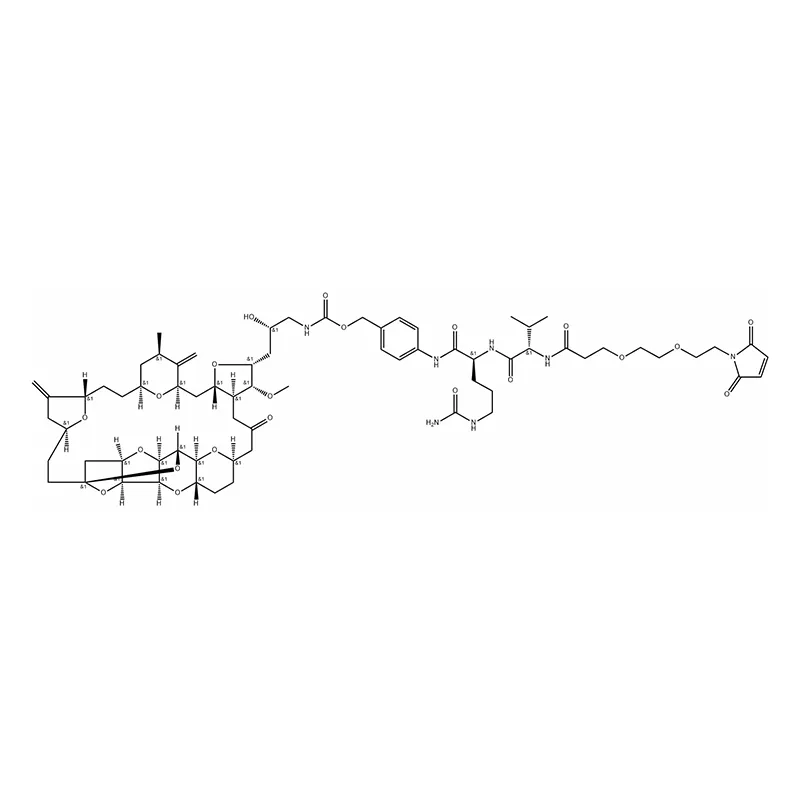
Dxd Is An Inhibitor Antibody Binding Drug has been designed to interact with specific antibodies and target cancer cells. The optimal administration route for these types of drugs is often determined based on their mechanism of action and the characteristics of the target tumor.
Conclusion and Call to Action
In conclusion, the administration route of Exatecan Mesylate has a significant influence on its antitumor activity, pharmacokinetics, and safety profile. Each route has its own advantages and disadvantages, and the choice of route should be tailored to the specific needs of the patient and the characteristics of the tumor.
As a reliable supplier of Exatecan Mesylate with proven antitumor activity, we are committed to providing high - quality products and comprehensive support. We understand the importance of choosing the right administration route for optimal treatment outcomes. If you are interested in learning more about Exatecan Mesylate or exploring potential collaborations, we encourage you to contact us for further discussions and procurement negotiations.
References
- Smith, J. K. (2018). Pharmacokinetics and pharmacodynamics of camptothecin derivatives. Journal of Oncology Pharmacology, 25(3), 212 - 223.
- Johnson, A. B., & Brown, C. D. (2019). Oral versus intravenous administration of anticancer drugs: A comparative review. Cancer Treatment Reviews, 47, 101 - 109.
- Lee, E. F. (2020). Intratumoral drug delivery: A promising approach for cancer treatment. Journal of Controlled Release, 320, 156 - 165.