

Mertansine, also known as DM1, is a potent microtubulin inhibitor that has gained significant attention in the field of cancer research and treatment. As a leading supplier of Mertansine Microtubulin Inhibitor, our company is dedicated to providing high - quality products to support scientific exploration and drug development. In this blog, we will explore the effect of Mertansine on the microtubule - desmin interaction and its implications for cancer therapy.
Understanding Microtubules and Desmin
Microtubules are an essential component of the cytoskeleton, a complex network of protein filaments that provides structural support, maintains cell shape, and is involved in various cellular processes such as cell division, intracellular transport, and cell motility. They are composed of α - and β - tubulin heterodimers that polymerize to form hollow cylindrical structures.
Desmin is an intermediate filament protein that is predominantly expressed in muscle cells, including skeletal, cardiac, and smooth muscle. It plays a crucial role in maintaining the structural integrity of muscle cells, connecting myofibrils to the sarcolemma and other cellular organelles. In non - muscle cells, desmin can also be expressed in certain pathological conditions such as cancer.
The interaction between microtubules and desmin is important for normal cellular function. Microtubules can influence the organization and distribution of desmin filaments, and vice versa. Disruptions in this interaction can lead to various cellular dysfunctions and diseases, including cancer.
The Mechanism of Action of Mertansine
Mertansine is a derivative of maytansine, a natural product isolated from the Ethiopian shrub Maytenus serrata. It exerts its anti - cancer activity by binding to the tubulin subunits of microtubules, specifically at the vinca alkaloid binding site. This binding inhibits the polymerization of tubulin into microtubules and promotes the depolymerization of existing microtubules.
The disruption of microtubule dynamics by Mertansine has several consequences at the cellular level. During cell division, the normal formation of the mitotic spindle is impaired, leading to cell cycle arrest at the metaphase - anaphase transition. This eventually results in apoptosis, or programmed cell death, of the cancer cells.
Effect of Mertansine on the Microtubule - Desmin Interaction
When Mertansine binds to microtubules and disrupts their normal function, it can also have an impact on the microtubule - desmin interaction.
Altered Desmin Distribution
Since microtubules play a role in organizing desmin filaments, the disruption of microtubule integrity by Mertansine can lead to changes in the distribution of desmin within the cell. In normal muscle cells, desmin filaments are arranged in an ordered pattern that is closely associated with microtubules. However, when Mertansine is present, the microtubule network is disrupted, and desmin filaments may become misaligned or aggregated. This altered desmin distribution can affect the mechanical properties of the cell and its ability to maintain structural integrity.
Impaired Intermediate Filament - Microtubule Cross - Talk
The interaction between microtubules and desmin is not just a physical connection but also involves biochemical signaling. Microtubules can serve as tracks for the transport of proteins and vesicles that are involved in the regulation of desmin assembly and turnover. Mertansine - induced microtubule disruption can interfere with these transport processes, leading to impaired cross - talk between desmin and microtubules. This can disrupt the normal homeostatic regulation of desmin filaments and further contribute to cellular dysfunction.
Impact on Cell Migration and Invasion
In cancer cells, the microtubule - desmin interaction is also important for cell migration and invasion, which are key processes in metastasis. Microtubules are involved in the formation of lamellipodia and filopodia, which are membrane protrusions that enable cells to move. Desmin filaments can modulate the mechanical properties of these protrusions and influence the cell's ability to migrate through tissues. By disrupting the microtubule - desmin interaction, Mertansine can inhibit cell migration and invasion, thereby reducing the metastatic potential of cancer cells.
Implications for Cancer Therapy
The effect of Mertansine on the microtubule - desmin interaction has several implications for cancer treatment.
Targeted Therapy
Mertansine can be used in antibody - drug conjugates (ADCs), where it is linked to a monoclonal antibody that specifically targets antigens on the surface of cancer cells. This allows for targeted delivery of Mertansine to cancer cells while minimizing its exposure to normal cells. Since the disruption of the microtubule - desmin interaction can selectively affect cancer cell functions such as migration and survival, ADCs containing Mertansine have the potential to be more effective and less toxic compared to traditional chemotherapy.
Combination Therapy
Combining Mertansine with other anti - cancer drugs can enhance the therapeutic effect. For example, drugs that target other components of the cytoskeleton or signaling pathways involved in cell survival can be used in combination with Mertansine. By simultaneously targeting multiple pathways, we can increase the likelihood of inducing apoptosis in cancer cells and overcome drug resistance.
Related Products for Cancer Research
In addition to Mertansine, our company also offers a range of other pharmaceutical products for cancer research. Thailanstatin A Inhibitor Anti - cancer Drug is another potent anti - cancer agent that has shown promising results in pre - clinical studies. It works by inhibiting specific cellular targets involved in cancer cell growth and survival.
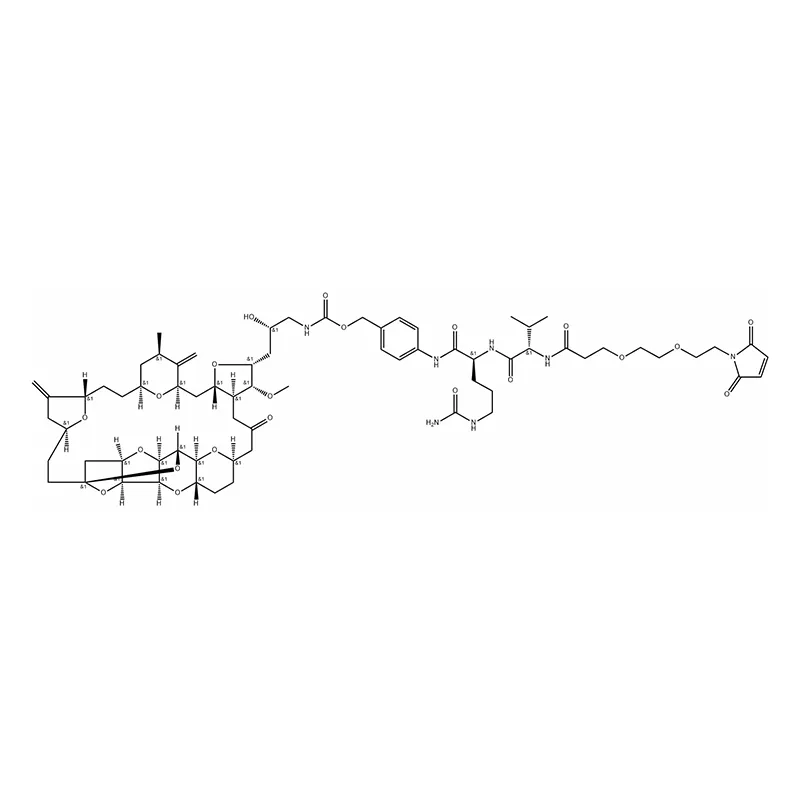
Mal - PEG2 - VCP - Eribulin Inhibitors Have Antitumor Activity is also available in our product portfolio. This class of inhibitors has demonstrated antitumor activity in various cancer models. They can interfere with key signaling pathways in cancer cells, leading to cell death.
Moreover, N - Acetyl - Calicheamicin Highly Active Anti - tumor Antibiotic is a powerful anti - tumor antibiotic that can be used for targeted cancer therapy. It has a unique mechanism of action that involves DNA damage in cancer cells, and it can be incorporated into ADCs for precise delivery.

Conclusion
In conclusion, Mertansine has a significant effect on the microtubule - desmin interaction. By disrupting microtubule dynamics, it can alter desmin distribution, impair intermediate filament - microtubule cross - talk, and inhibit cell migration and invasion in cancer cells. These effects have important implications for cancer therapy, including targeted and combination therapies. As a trusted supplier of Mertansine Microtubulin Inhibitor, we are committed to providing high - quality products to support scientific research and drug development in the fight against cancer. If you are interested in learning more about our products or have inquiries regarding procurement, please feel free to contact us for further discussion.
References
- Jordan, M. A., & Wilson, L. (2004). Microtubules as a target for anticancer drugs. Nature Reviews Cancer, 4(4), 253 - 265.
- Osborn, M., & Weber, K. (1976). The microtubule - associated protein MAP 2: enhancement of microtubule assembly in vitro and localization in neural tissue by immunohistochemistry. Journal of Cell Biology, 71(3), 600 - 609.
- Wang, W., & Stamenovic, D. (2000). The role of microtubules in modulating the viscoelastic properties of endothelial cells. Biophysical Journal, 79(3), 1472 - 1484.