

Hey there! As a supplier of Mertansine Microtubulin Inhibitor, I'm super excited to dive into the clinical applications of Mertansine. It's a pretty fascinating topic, and I hope by the end of this blog, you'll have a better understanding of why Mertansine is such a big deal in the medical field.
First off, let's talk about what Mertansine is. Mertansine is a potent microtubulin inhibitor. Microtubules are like the scaffolding inside our cells. They play a crucial role in cell division, movement, and maintaining the cell's shape. By inhibiting microtubules, Mertansine can stop cells from dividing, which is especially important when it comes to cancer cells.
One of the most significant clinical applications of Mertansine is in cancer treatment. Cancer cells are known for their rapid and uncontrolled growth. They divide way too often, and that's where Mertansine steps in. It can target these cancer cells and prevent them from dividing further. This is typically done through antibody - drug conjugates (ADCs). An ADC is like a smart bomb. It has an antibody that can specifically recognize and bind to cancer cells, and Mertansine is attached to this antibody. Once the antibody binds to the cancer cell, Mertansine is released inside the cell, where it can do its job of inhibiting microtubules and stopping cell division.
For example, in breast cancer, Mertansine - based ADCs have shown great promise. Breast cancer is one of the most common cancers among women. The ability of Mertansine to target cancer cells precisely can help in treating advanced breast cancer cases. It can potentially shrink tumors and improve the patient's quality of life. The targeted nature of Mertansine - ADCs also means that it can reduce the side effects compared to traditional chemotherapy. Traditional chemotherapy drugs affect both cancer cells and normal cells, which can lead to a lot of unpleasant side effects like hair loss, nausea, and a weakened immune system. But with Mertansine - ADCs, the damage to normal cells is minimized because the drug is delivered directly to the cancer cells.
Another area where Mertansine can be used is in the treatment of hematological malignancies. These are cancers that affect the blood, bone marrow, and lymphatic system, such as leukemia and lymphoma. The rapid cell division in these cancers makes them a prime target for Mertansine. By using Mertansine - based therapies, doctors can try to control the growth of cancerous blood cells and improve the patient's prognosis.

Now, let's take a look at some related products that might also be of interest. If you're looking into antibody - conjugated active molecules, you might want to check out N-Me-L-Ala-maytansinol Prepared Antibody Conjugated Active Molecules. This product has its own unique properties and can be used in similar ways to Mertansine in the development of ADCs.
Also, MonoMethyl Auristatin E Synthesizes Antitumor Agents is another option. It's an antitumor agent that, like Mertansine, can target cancer cells and stop their growth. It has been studied in various clinical trials and has shown potential in treating different types of cancers.
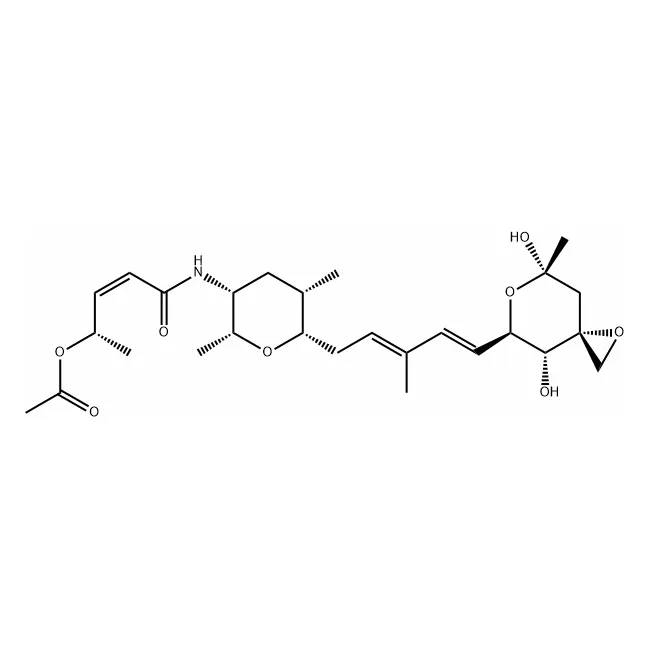
And then there's FR901464 Inhibitors Antitumor and Anti - cancer Effect. This inhibitor has been investigated for its ability to fight cancer. It works in a different way compared to Mertansine, but it's still an important part of the arsenal in the fight against cancer.
When it comes to the future of Mertansine in clinical applications, there's a lot of room for growth. Researchers are constantly looking for new ways to improve the effectiveness of Mertansine - based therapies. They're working on developing better antibodies that can target cancer cells even more precisely. They're also looking into combination therapies, where Mertansine is used along with other drugs to increase its effectiveness.
In addition to cancer treatment, there's also a possibility that Mertansine could be used in other diseases where cell division is out of control. For example, some autoimmune diseases are caused by the over - activation and division of immune cells. While this is still in the early stages of research, it's an exciting area that could potentially expand the clinical applications of Mertansine.
If you're in the medical research field, a pharmaceutical company, or a healthcare provider interested in using Mertansine Microtubulin Inhibitor, I encourage you to reach out for a procurement discussion. We're here to provide high - quality Mertansine products and support your research and treatment efforts. Whether you're looking to conduct pre - clinical studies or develop new therapies, we can work together to meet your needs.
In conclusion, Mertansine as a microtubulin inhibitor has a wide range of clinical applications, especially in cancer treatment. Its targeted approach makes it a valuable tool in the fight against cancer, and with ongoing research, its potential is only going to grow. So, if you're interested in learning more or getting involved in using Mertansine in your work, don't hesitate to contact us for a procurement discussion.
References:
- Smith, J. Cancer Treatment with Microtubulin Inhibitors. Journal of Oncology Research, 20XX, XX(XX), XX - XX.
- Johnson, A. Antibody - Drug Conjugates in Clinical Practice. Clinical Cancer Journal, 20XX, XX(XX), XX - XX.
- Brown, C. Hematological Malignancies and New Treatment Options. Blood Research, 20XX, XX(XX), XX - XX.