

Hey there! As a supplier of Exatecan Mesylate, which is known to have antitumor activity, I've been getting a lot of questions lately about how it stacks up against other antitumor drugs. So, I thought I'd dive deep into this topic and share my thoughts with you all.
First off, let's talk a bit about Exatecan Mesylate. It's a topoisomerase I inhibitor. Topoisomerases are enzymes that play a crucial role in DNA replication, transcription, and repair. By inhibiting topoisomerase I, Exatecan Mesylate can prevent cancer cells from replicating their DNA and ultimately lead to their death. This mechanism of action gives it a unique edge in the fight against cancer.
Now, when we compare Exatecan Mesylate to other antitumor drugs, we need to look at several factors like efficacy, side - effects, and the types of cancer it can treat.
Efficacy
Efficacy is, of course, one of the most important aspects. Some traditional chemotherapy drugs work by targeting rapidly dividing cells in general. While this can be effective against cancer cells, it also affects normal cells that divide quickly, like those in the hair follicles, bone marrow, and the lining of the digestive tract. This often leads to a lot of side - effects.
Exatecan Mesylate, on the other hand, has a more targeted approach. It specifically goes after the topoisomerase I enzyme in cancer cells. In clinical trials, it has shown promising results in treating various types of cancers, including small - cell lung cancer and ovarian cancer.
For small - cell lung cancer, some studies have reported that patients treated with Exatecan Mesylate had a better response rate compared to those on certain other chemotherapy drugs. The response rate refers to the percentage of patients whose tumors shrink or disappear after treatment. In some cases, the tumors of patients on Exatecan Mesylate shrank more significantly, and they also had a longer progression - free survival period. Progression - free survival means the length of time during which the cancer does not grow or spread.
In ovarian cancer, Exatecan Mesylate has also demonstrated its potential. It can be used in combination with other drugs to enhance the overall treatment effect. The combination therapy has shown better outcomes in terms of tumor control and patient survival compared to using single - agent traditional chemotherapy.
Side - effects
Another important factor is the side - effect profile. As I mentioned earlier, many traditional antitumor drugs have a wide range of side - effects because they target all rapidly dividing cells. These can include hair loss, nausea, vomiting, fatigue, and a weakened immune system.
Exatecan Mesylate generally has a more manageable side - effect profile. While it can still cause some side - effects like mild nausea, diarrhea, and a decrease in white blood cell count, these are often less severe and easier to manage compared to those of some other drugs. For example, the hair loss associated with Exatecan Mesylate is usually less pronounced than that with some common chemotherapy agents. This is a big plus for patients, as it can have a significant impact on their quality of life during treatment.
Types of Cancer
Exatecan Mesylate has a relatively broad spectrum of activity against different types of cancers. It's not just limited to small - cell lung cancer and ovarian cancer. It has also shown potential in treating other solid tumors such as gastric cancer and colorectal cancer.
In gastric cancer, pre - clinical studies have suggested that Exatecan Mesylate can inhibit the growth of cancer cells in the stomach. And in colorectal cancer, it can be used in combination with other drugs to improve the treatment outcome.
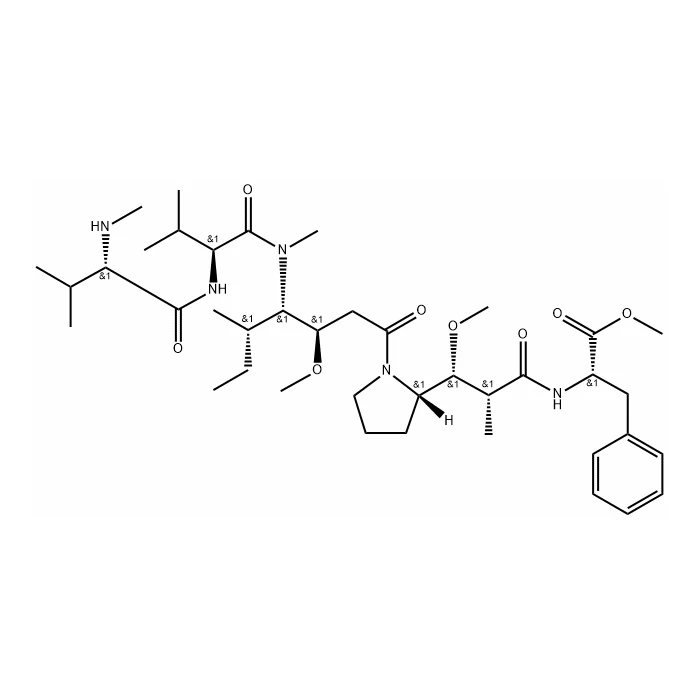
Now, let's mention some other antitumor drugs for comparison. There are drugs like MMAF - Ome Inhibitors, which are part of the antibody - drug conjugate (ADC) payloads. These drugs work by delivering a toxic payload directly to cancer cells through an antibody. They are very targeted, but their application is often more limited to specific types of cancers where the target antigen is present on the cancer cells.
Val - Cit - PAB - MMAE Is An Antibody Drug Conjugator Inhibitor is another type of ADC payload. It has a similar mechanism of action to MMAF - Ome Inhibitors. While these drugs can be very effective in the right setting, they may not be as versatile as Exatecan Mesylate in terms of the types of cancers they can treat.
Maytasinol Microtubule Assembly Inhibitor is yet another antitumor drug. It works by interfering with the microtubule assembly in cancer cells, which is essential for cell division. However, like many traditional drugs, it can have significant side - effects on normal cells that rely on microtubules for their function.

Conclusion
So, is Exatecan Mesylate more effective than other antitumor drugs? Well, it's not a straightforward yes or no answer. In terms of its targeted mechanism of action, relatively manageable side - effect profile, and broad spectrum of activity against different types of cancers, it has a lot going for it.
In some cases, especially for small - cell lung cancer and ovarian cancer, it has shown better efficacy and patient outcomes compared to some traditional and even some targeted drugs. However, the choice of the best antitumor drug still depends on many factors, including the type and stage of cancer, the patient's overall health, and previous treatment history.
If you're in the medical field or involved in cancer research and are interested in exploring the potential of Exatecan Mesylate for your patients or studies, I'd love to have a chat with you. We can discuss how it can fit into your treatment protocols or research projects. Feel free to reach out to me to start a conversation about procurement and how we can work together to make a difference in the fight against cancer.
References
- Clinical trials on Exatecan Mesylate in small - cell lung cancer.
- Studies on the combination therapy of Exatecan Mesylate in ovarian cancer.
- Pre - clinical research on Exatecan Mesylate in gastric and colorectal cancer.