

Hey there! So, you're interested in how to analyze ADC payloads? Well, you've come to the right place. As a supplier of ADC payloads, I've got a ton of experience and knowledge to share with you. In this blog post, I'm going to walk you through the process of analyzing ADC payloads, from understanding what they are to the methods you can use to evaluate them.
First things first, let's talk about what ADC payloads are. ADC stands for Antibody - Drug Conjugate, and the payload is the cytotoxic drug that's attached to the antibody. The main idea behind ADCs is to deliver a high dose of a potent anti - cancer drug directly to the tumor cells while minimizing damage to healthy tissues. This is done by using an antibody that specifically targets antigens on the surface of tumor cells.
Now, analyzing ADC payloads is crucial for several reasons. It helps us ensure the quality, safety, and efficacy of the ADCs. We want to make sure that the payload is stable, that it can be effectively conjugated to the antibody, and that it can be released at the right place and time to exert its anti - cancer effect.
Understanding the Different Types of Payloads
There are several types of ADC payloads out there. One popular type is Thailanstatin A Inhibitor Anti - cancer Drug. Thailanstatin A is a potent anti - cancer agent that can target specific pathways within the tumor cells. It's known for its high cytotoxicity, which means it can effectively kill the cancer cells.
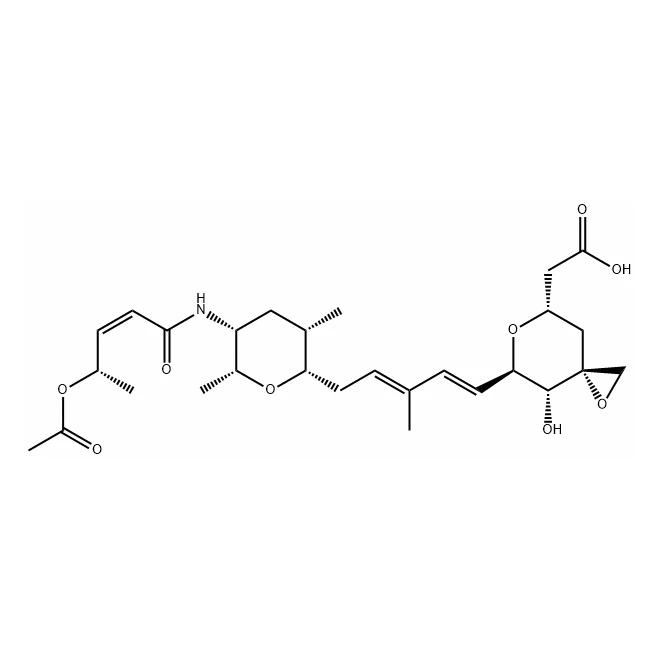

Another well - known payload is MonoMethyl Auristatin E Synthesizes Antitumor Agents. MMAE is a synthetic antimitotic agent. It works by preventing the formation of microtubules, which are essential for cell division. By disrupting cell division, MMAE can stop the growth and spread of cancer cells.
DM4 Inhibitor Antibody Drug Conjugate is also a significant payload. DM4 is a maytansinoid derivative. It binds to tubulin, a protein involved in the structure and function of microtubules, and inhibits its polymerization. This leads to cell cycle arrest and ultimately cell death in cancer cells.
Physicochemical Analysis
When it comes to analyzing ADC payloads, physicochemical analysis is the first step. This involves looking at the physical and chemical properties of the payload.
Solubility
Solubility is a crucial property. We need to make sure that the payload is soluble in the relevant solvents, especially the ones used in the conjugation process. If the payload has low solubility, it can lead to issues like precipitation during the manufacturing of ADCs. We use techniques like spectrophotometry to measure the solubility of the payload in different solvents. By plotting the absorbance of the solution at different wavelengths, we can determine the concentration of the dissolved payload and thus its solubility.
Stability
Stability is another vital aspect. The payload needs to be stable under various conditions, including storage and in the body. Payloads can degrade due to factors like temperature, pH, and the presence of other chemicals. We conduct stability studies by exposing the payload to different temperatures and pH levels over a period of time. Then, we use analytical techniques like high - performance liquid chromatography (HPLC) to monitor any changes in the payload's chemical structure. For example, if the payload starts to break down, we'll see additional peaks in the HPLC chromatogram that correspond to the degradation products.
Molecular Weight
Knowing the molecular weight of the payload is important for understanding its behavior and for accurate dosing. We can determine the molecular weight using mass spectrometry. In mass spectrometry, the payload molecules are ionized, and then their mass - to - charge ratio is measured. This allows us to calculate the molecular weight of the payload.
Biological Analysis
Biological analysis of ADC payloads focuses on their effects on cells and organisms.
Cytotoxicity Assays
Cytotoxicity assays are used to measure the ability of the payload to kill cancer cells. We typically use cell lines that are representative of different types of cancers. The cells are exposed to different concentrations of the payload, and then we measure the viability of the cells after a certain period of time. There are several methods to measure cell viability, such as the MTT assay. In the MTT assay, a yellow dye is added to the cells. Living cells can convert this dye into a purple formazan product, and the amount of formazan can be measured spectrophotometrically. By comparing the absorbance of the treated cells with the untreated cells, we can determine the percentage of cell viability and thus the cytotoxicity of the payload.
Target Specificity
We also need to ensure that the payload is specific to the target cells. This is where the antibody in the ADC comes in. The antibody is designed to bind to specific antigens on the surface of tumor cells. We can use techniques like flow cytometry to study the binding specificity. In flow cytometry, cells are labeled with fluorescent antibodies that recognize the same antigen as the ADC antibody. Then, the cells are passed through a flow cytometer, which measures the fluorescence intensity of each cell. This allows us to determine how many cells are expressing the target antigen and how well the ADC can bind to them.
In - vitro and In - vivo Studies
In - vitro studies are conducted in a laboratory setting using cell cultures or tissues. They're useful for quickly screening the payload's properties and for getting initial data on its efficacy and safety. However, they have limitations because they don't fully mimic the complex environment of the human body.
In - vivo studies, on the other hand, are done in living organisms, usually animals. These studies can provide more relevant information about how the ADC payload behaves in a whole - body system. We can measure parameters like tumor growth inhibition, distribution of the ADC in different tissues, and any potential side effects. For example, we can use imaging techniques like positron emission tomography (PET) to track the distribution of the ADC in the body.
Quality Control and Release Testing
Once we've analyzed the ADC payloads, we need to perform quality control and release testing. This involves a series of tests to ensure that the payload meets the required specifications. We check the identity, purity, strength, and quality of the payload. If the payload passes all these tests, it can be released for use in the production of ADCs.
Why Choose Our ADC Payloads
As an ADC payloads supplier, we take pride in offering high - quality products. Our payloads are carefully manufactured and thoroughly analyzed using the latest techniques. We have a team of experts who are dedicated to ensuring the quality and safety of our products. Whether you're a research institution looking to conduct pre - clinical studies or a pharmaceutical company developing new ADCs, we can provide you with the right payloads for your needs.
If you're interested in learning more about our ADC payloads, or if you're ready to start a procurement process, don't hesitate to reach out. We're more than happy to discuss your requirements and provide you with samples for testing.
References
- [1] Carter, P. J., & Senter, P. D. (2008). Antibody - drug conjugates for cancer therapy. Cancer Journal, 14(3), 154 - 169.
- [2] Ducry, L., & Stump, B. (2010). Antibody - drug conjugates: linking cytotoxic payloads to monoclonal antibodies. Bioconjugate Chemistry, 21(1), 5 - 13.
- [3] Alley, S. C., Okeley, N. M., & Senter, P. D. (2010). Antibody - drug conjugates: targeted drug delivery for cancer. Current Opinion in Chemical Biology, 14(4), 529 - 537.