

Hey there! I'm a supplier of Trabectedin Antitumor Drugs, and today I wanna talk about the role of Trabectedin in the treatment of brain tumors.
Brain tumors are a real pain in the neck. They're complex, and treating them is no walk in the park. There are different types of brain tumors, like gliomas, meningiomas, and pituitary adenomas, each with its own set of challenges. Traditional treatments such as surgery, radiation, and chemotherapy have been the go - to methods, but they don't always cut it. That's where Trabectedin comes in.
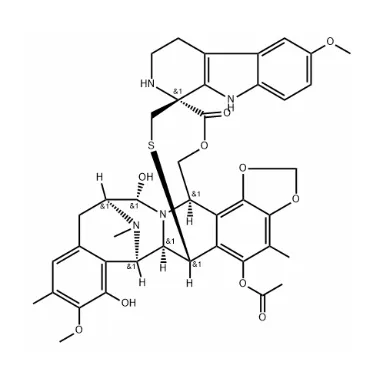
Trabectedin is a pretty interesting drug. It's derived from a marine organism, and its mechanism of action is quite unique. Unlike some other drugs that just go after cancer cells in a straightforward way, Trabectedin interacts with the DNA of cancer cells in a more complex manner. It binds to the minor groove of DNA, which can cause a whole bunch of changes in the cell. For one, it can disrupt the normal function of transcription factors, which are like the "traffic controllers" of the cell's genetic information. This disruption can lead to the activation of certain pathways that ultimately result in the death of cancer cells.
When it comes to brain tumors, the blood - brain barrier (BBB) is a major hurdle. The BBB is like a security guard for the brain, keeping out harmful substances but also making it difficult for drugs to reach the tumor. Trabectedin has shown some potential in getting through this barrier. Some pre - clinical studies have suggested that it can penetrate the BBB to a certain extent, which is a big deal. If a drug can reach the tumor site in the brain, it has a better chance of doing its job.
In terms of its anti - tumor effects on brain tumors, Trabectedin can target different aspects of the tumor microenvironment. Brain tumors don't exist in isolation; they're surrounded by a bunch of other cells and molecules that support their growth. Trabectedin can affect the behavior of these supporting cells, like tumor - associated macrophages. These macrophages can sometimes help the tumor grow and spread, but Trabectedin can change their function and make them less supportive of the tumor.
Another important aspect is its ability to induce apoptosis, or programmed cell death, in brain tumor cells. Cancer cells are often good at avoiding death, but Trabectedin can trigger the self - destruction process in these cells. It can also inhibit angiogenesis, which is the formation of new blood vessels. Tumors need a blood supply to grow and spread, and by cutting off this supply, Trabectedin can starve the tumor.
Now, let's talk about some of the clinical evidence. While there's still more research needed, there have been some early - stage clinical trials looking at Trabectedin for brain tumors. These trials have shown that in some patients, Trabectedin can lead to a reduction in tumor size. Of course, not every patient responds the same way, and there are still a lot of questions to be answered. But the initial results are promising.
One of the advantages of Trabectedin is its relatively low toxicity compared to some other chemotherapy drugs. Traditional chemotherapy can often cause a whole host of side effects, like nausea, hair loss, and a weakened immune system. Trabectedin seems to have a more favorable side - effect profile. In clinical trials, the most common side effects are usually things like fatigue, mild nausea, and a decrease in certain blood cell counts, but these are often manageable.
It's also important to mention that Trabectedin can be used in combination with other treatments. For example, it could be used alongside radiation therapy. Radiation therapy works by damaging the DNA of cancer cells, and Trabectedin's interaction with DNA might enhance the effects of radiation. This combination approach could potentially lead to better outcomes for patients with brain tumors.

But like any drug, Trabectedin isn't a magic bullet. There are still challenges. One is the development of resistance. Over time, cancer cells can figure out ways to adapt to the drug and become resistant. Researchers are working on understanding the mechanisms of resistance and finding ways to overcome it. Another challenge is optimizing the dosing and administration of the drug. Figuring out the right amount of Trabectedin to give and the best way to give it (like through intravenous injection) is crucial for getting the best results.
If you're in the medical field and are interested in exploring Trabectedin for the treatment of brain tumors, we're here to help. As a supplier of Trabectedin Antitumor Drugs, we can provide high - quality products. We also have a range of other related drugs, like Lurbinectedin Small Cell Lung Cancer and Amphotericin B Polyene Antifungal Drugs.
If you're thinking about using Trabectedin in your research or treatment protocols, don't hesitate to reach out. We can have a chat about your specific needs, and we'll do our best to provide the right solutions. Whether you're a researcher looking for a reliable source of drugs for your studies or a medical professional interested in incorporating Trabectedin into your treatment plans, we're here to support you. Let's work together to make a difference in the treatment of brain tumors.
References
- Some pre - clinical studies on Trabectedin's interaction with DNA and its effects on cancer cells
- Early - stage clinical trial reports on Trabectedin for brain tumors
- Research on the blood - brain barrier penetration of Trabectedin