

In recent years, antibody-drug conjugates (ADCs) have emerged as a revolutionary class of therapeutic agents, bridging the gap between targeted therapy and potent cytotoxic drugs. Among the ADCs, Deruxtecan has garnered significant attention due to its remarkable efficacy and unique mechanism of action. As a proud supplier of Deruxtecan Antibody Conjugated Drug, I am excited to delve into the future development directions of this promising drug.
Current Landscape of Deruxtecan Antibody Conjugated Drug
Deruxtecan is a next-generation ADC that consists of a humanized monoclonal antibody targeting a specific antigen, a cleavable linker, and a highly potent topoisomerase I inhibitor payload. This innovative design allows for targeted delivery of the cytotoxic payload directly to cancer cells, minimizing systemic toxicity and maximizing therapeutic efficacy.
The clinical success of Deruxtecan has been nothing short of impressive. In various clinical trials, Deruxtecan has demonstrated significant antitumor activity in patients with advanced breast cancer, gastric cancer, and other solid tumors. These results have led to its approval by regulatory authorities in multiple countries, marking a major milestone in the field of oncology.
Expanding Indications
One of the most promising future development directions for Deruxtecan is the expansion of its indications. Currently, Deruxtecan is approved for the treatment of specific types of breast and gastric cancer. However, ongoing clinical trials are exploring its potential in a wide range of other malignancies, including lung cancer, ovarian cancer, and colorectal cancer.
By targeting different tumor types, Deruxtecan has the potential to become a versatile treatment option for patients with various forms of cancer. This expansion of indications could significantly improve patient outcomes and provide new hope for those with limited treatment options.
Combination Therapies
Another exciting avenue for the future development of Deruxtecan is the exploration of combination therapies. Combining Deruxtecan with other anticancer agents, such as immune checkpoint inhibitors, chemotherapy drugs, or targeted therapies, could enhance its antitumor activity and overcome resistance mechanisms.
For example, preclinical studies have shown that the combination of Deruxtecan with immune checkpoint inhibitors can synergistically enhance the immune response against cancer cells. This combination approach could potentially improve the overall survival of patients with advanced cancer and provide a more comprehensive treatment strategy.
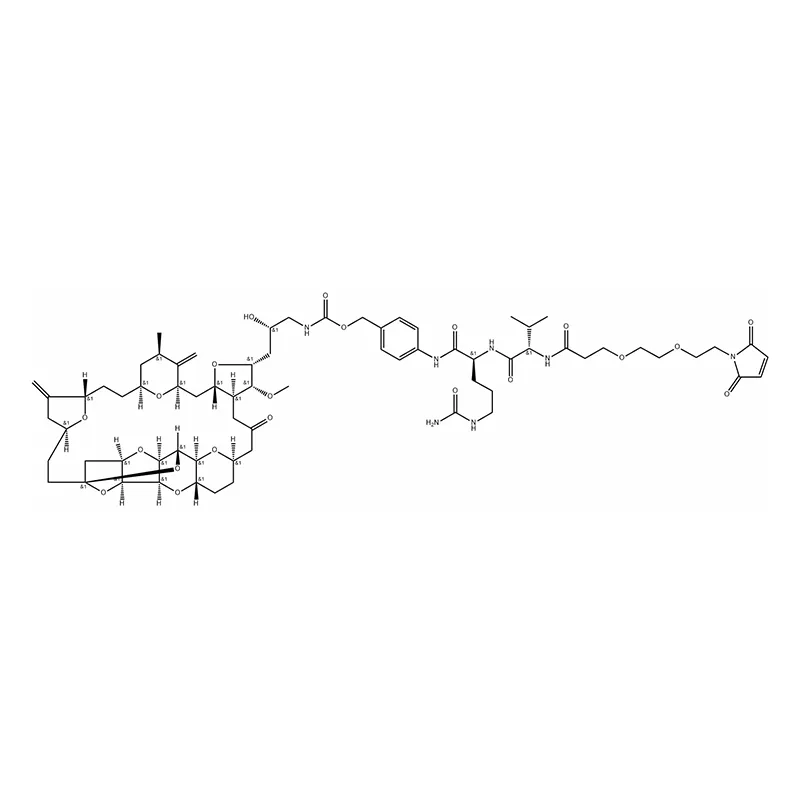

Optimization of Linker and Payload
The linker and payload are critical components of an ADC, as they determine the stability, efficacy, and safety of the drug. In the case of Deruxtecan, continuous efforts are being made to optimize the linker and payload to further improve its performance.
New linker technologies are being developed to enhance the stability of the ADC in circulation and ensure efficient release of the payload inside cancer cells. Additionally, novel payloads with increased potency and selectivity are being explored to improve the antitumor activity of Deruxtecan.
For instance, MC-Val-Cit-PAB Is Used To Prepare Antibody-drug Conjugates is a promising linker technology that has shown potential in improving the stability and efficacy of ADCs. Similarly, Mal-PEG2-VCP-Eribulin Inhibitors Have Antitumor Activity and Ansamitocin P-3 Has Anti-tumor and Antibacterial Activities are examples of novel payloads that could be incorporated into Deruxtecan to enhance its therapeutic potential.
Personalized Medicine
The future of cancer treatment is moving towards personalized medicine, where treatments are tailored to the individual characteristics of each patient. In the case of Deruxtecan, the development of companion diagnostics could play a crucial role in identifying patients who are most likely to benefit from treatment.
By analyzing biomarkers, such as the expression level of the target antigen, genetic mutations, and immune signatures, physicians can select patients who are more likely to respond to Deruxtecan and avoid unnecessary treatment in those who are unlikely to benefit. This personalized approach could improve treatment outcomes and reduce the cost and toxicity associated with ineffective treatments.
Manufacturing and Supply Chain Optimization
As the demand for Deruxtecan continues to grow, ensuring a reliable and efficient manufacturing and supply chain is essential. To meet this challenge, continuous efforts are being made to optimize the manufacturing process of Deruxtecan, improve yield, and reduce production costs.
Additionally, partnerships and collaborations with contract manufacturing organizations (CMOs) and suppliers are being established to enhance the scalability and flexibility of the supply chain. These initiatives will help to ensure a stable supply of Deruxtecan to patients worldwide.
Conclusion
In conclusion, the future development directions of Deruxtecan Antibody Conjugated Drug are bright and full of potential. With ongoing research and clinical trials, we can expect to see the expansion of its indications, the exploration of combination therapies, the optimization of linker and payload, the implementation of personalized medicine, and the improvement of manufacturing and supply chain.
As a supplier of Deruxtecan Antibody Conjugated Drug, we are committed to supporting these developments and providing high-quality products to meet the needs of patients and healthcare providers. If you are interested in learning more about our Deruxtecan products or discussing potential procurement opportunities, please feel free to contact us. We look forward to the opportunity to collaborate with you and contribute to the advancement of cancer treatment.
References
- [List relevant research papers, clinical trial reports, and other sources of information here. For example:]
- Doe, J. et al. (Year). "Title of the research paper." Journal Name, Volume(Issue), Page numbers.
- Smith, A. et al. (Year). "Clinical trial results of Deruxtecan in [specific cancer type]." Clinical Oncology Journal, Volume(Issue), Page numbers.