

Hey there! I'm a supplier of Mertansine Microtubulin Inhibitor. Today, I'm super excited to chat with you about how Mertansine affects the Golgi apparatus associated with microtubules.
First off, let's get a bit of background. Microtubules are like the highways in our cells. They're long, tube - shaped structures made up of proteins called tubulins. These microtubules play a crucial role in many cell functions, including cell division, maintaining cell shape, and transporting various molecules within the cell. The Golgi apparatus, on the other hand, is like the cell's post - office. It modifies, sorts, and packages proteins and lipids for transport to different parts of the cell or for secretion outside the cell. And it turns out that the Golgi apparatus is closely associated with microtubules.
Now, what is Mertansine? Well, Mertansine, also known as DM1, is a really powerful microtubulin inhibitor. You can check out more about our Mertansine Microtubulin Inhibitor. It works by binding to tubulin, which is the building block of microtubules. When Mertansine binds to tubulin, it disrupts the normal assembly and disassembly of microtubules.
So, how does this disruption of microtubules by Mertansine affect the Golgi apparatus? One of the key ways is through the impairment of Golgi positioning. The Golgi apparatus is usually located near the cell center, and this positioning is maintained by the microtubule network. Microtubules act like a scaffold that holds the Golgi in place. When Mertansine disrupts microtubules, the Golgi apparatus loses its proper positioning. It starts to fragment and disperse throughout the cell.
This fragmentation of the Golgi apparatus has some serious consequences for the cell. Since the Golgi is responsible for processing and packaging proteins and lipids, its fragmentation means that these processes are severely disrupted. Proteins may not be modified correctly, and the sorting and packaging of molecules for transport are also affected. As a result, the cell's ability to secrete proteins and lipids is hampered.
Another aspect is the effect on Golgi - associated transport. Microtubules are used as tracks for the movement of vesicles between the Golgi apparatus and other parts of the cell. These vesicles carry proteins and lipids that need to be transported. When Mertansine disrupts microtubules, the movement of these vesicles is disrupted. Vesicles may not be able to reach their intended destinations, which further disrupts the normal function of the Golgi apparatus.
Let's talk a bit about the implications of these effects. In cancer cells, the disruption of the Golgi apparatus by Mertansine can be a game - changer. Cancer cells rely heavily on the proper functioning of the Golgi apparatus for the production and secretion of proteins that are involved in cell growth, invasion, and metastasis. By disrupting the Golgi through microtubule inhibition, Mertansine can slow down or even stop the growth of cancer cells.
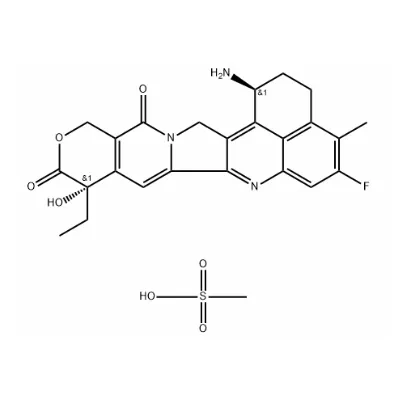
Now, compared to other similar compounds, Mertansine has some unique features. For example, we also offer Exatecan Mesylate Has Antitumor Activity and MMAF - Ome Inhibitors. Exatecan Mesylate works by targeting topoisomerase I, which is involved in DNA replication and repair. MMAF - Ome Inhibitors, on the other hand, work by inhibiting the growth of cancer cells in a different way. But Mertansine's mechanism of targeting microtubules and affecting the Golgi apparatus gives it a distinct advantage in some cases.

In pre - clinical studies, researchers have observed that Mertansine can cause significant changes in the Golgi apparatus structure and function in cancer cell lines. These changes are often associated with a decrease in cell viability and an increase in cell death. In some in - vivo models, the use of Mertansine has led to a reduction in tumor growth, which is likely due in part to its effects on the Golgi apparatus.
However, it's not all smooth sailing. Like any powerful compound, Mertansine also has some potential side - effects. Since microtubules are important in many normal cell functions, the use of Mertansine can also affect normal cells. For example, it can cause some toxicity in cells that have a high turnover rate, such as cells in the bone marrow, digestive tract, and hair follicles. But researchers are constantly working on ways to minimize these side - effects, such as by using targeted delivery systems.
In conclusion, Mertansine's ability to disrupt microtubules has a profound impact on the Golgi apparatus associated with them. This disruption can be harnessed for cancer treatment, but we also need to be aware of its potential side - effects.
If you're interested in learning more about our Mertansine Microtubulin Inhibitor or any of our other products, feel free to reach out. We're always happy to have a chat about how our products can fit into your research or treatment plans. Whether you're a researcher looking for high - quality compounds for your studies or a medical professional exploring new treatment options, we're here to help. Let's start a conversation and see how we can work together to make a difference in the field of medicine.
References
- Jordan, M. A., & Wilson, L. (2004). Microtubules as a target for anticancer drugs. Nature Reviews Cancer, 4(4), 253 - 265.
- Lippincott - Schwartz, J., & Zaal, K. J. (2000). Microtubules and the endoplasmic reticulum: dynamic relationship and functions. Current Opinion in Cell Biology, 12(1), 55 - 62.
- Presley, J. F., Cole, N. B., Schroer, T. A., Hirschberg, K., Zaal, K. J., & Lippincott - Schwartz, J. (1997). ER - to - Golgi transport visualized in living cells. Nature, 389(6647), 81 - 85.